
Installing new carpet is one of the most effective ways to enhance your home’s comfort,…
What is Carpet Over Concrete?
Carpet over concrete refers to installing carpet directly on concrete floors or a concrete slab, often in basements, ground-level rooms, or commercial spaces. This process involves careful moisture testing, selecting the right carpet type, installing a moisture barrier or vapor barrier, laying carpet padding, and securing the carpet with concrete tack strips.
When done correctly, carpet over concrete adds warmth, comfort underfoot, and style, while helping prevent odor, resist moisture, and create a durable surface—even over cold floors or areas previously covered with ceramic tile. Learn more about our carpet solutions on A1 Floors’ Carpet Flooring page.
Why Proper Preparation Matters When Installing Carpet Over Concrete
Installing carpet over concrete can transform a space, but skipping steps can lead to mold growth, premature wear, and unpleasant odors. Proper preparation ensures that your flooring project lasts and your carpet backing and padding remain protected.
Key steps include:
- Moisture testing to check the concrete surface and concrete subfloor.
- Installing vapor barriers or moisture-resistant underlayment.
- Choosing the right carpet type for your room or commercial space.
- Preparing walls, edges, and ground surfaces for a smooth installation.
Essential Moisture Checks
Before laying carpet, check for moisture in the concrete slab:
Humidity and Surface Checks
- Humidity Check Inside the Slab – Measures moisture within the concrete to prevent the formation of wet layers.
- Surface Moisture Test – Uses simple tools or plastic sheets to detect moisture on the concrete surface.
- Calcium Chloride Test – Quantifies surface vapor emission for accuracy.
- pH Check – Ensures the adhesive will bond correctly.
- Dehumidifier Use – Helps reduce higher humidity in basement floors before installation.
These tests help protect carpet padding and prevent mold growth, premature wear, and odor.
Choosing Barriers and Underlayment
Even with moderate moisture, using vapor barriers, underlayment, and proper padding ensures durability:
Vapor Barrier Films
Thick plastic sheets or rubber underlayment layers are laid over the concrete, with the edges sealed.
Moisture-Resistant Carpet Padding
Synthetic fibers or rubber pads resist moisture better than traditional foam, providing extra insulation.
Liquid Sealers
Apply directly to the concrete slab to block vapor transmission.
These materials prevent carpet backing from absorbing moisture and help maintain a warm, comfortable floor.
Carpet Installation: Step-by-Step Process
Follow these steps to avoid common mistakes:
- Acclimation Period: Let the carpet and padding sit flat in the room for 48–72 hours to adjust to temperature changes and higher humidity.
- Surface Preparation: Sand, fill cracks, and level the concrete floors. Remove dust and debris to ensure adhesives stick.
- Barrier Sealing: Overlap vapor barriers by at least 6 inches and seal with duct tape or other sealing materials.
- Tack Strips and Edges: Use concrete tack strips for a secure hold. Avoid wood strips that can warp.
- Padding Orientation: If the pad has a moisture barrier, ensure it’s oriented the same way as required.
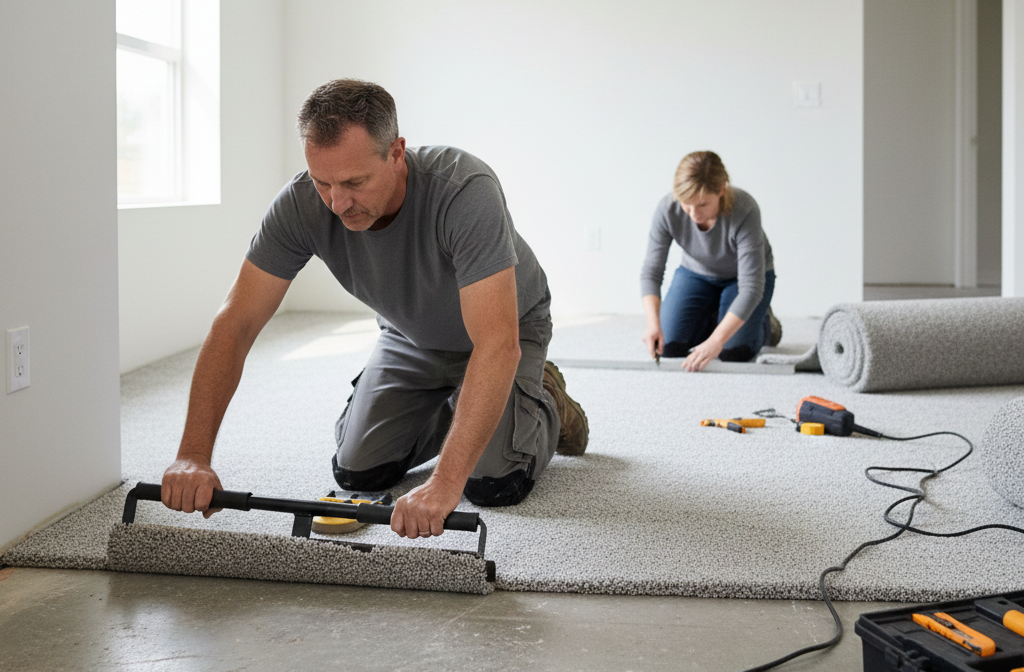
- Laying Carpet: Carefully roll out carpet tiles, synthetic carpets, or area rugs. Stretch using a knee kicker and bond seams with a seaming iron.
- Adhesive Application: Use the recommended adhesives to attach carpet to concrete surfaces or slabs.
Avoid moving furniture back onto the carpet for at least 24 hours to allow adhesives to set.
Common Mistakes to Avoid
- Skipping moisture testing: Failing to check the concrete slab for moisture can lead to mold growth, premature wear, and odor issues.
- Ignoring cracks or uneven concrete floors – Uneven surfaces can cause lumps in the carpet and affect the adhesive bond.
- Poor barrier sealing – Failing to properly seal vapor barriers with duct tape or trim edges with tin snips can allow moisture to seep through.
- Using the wrong tack strips – Incorrect concrete tack strips or improper placement can cause loose edges.
- Incorrect padding orientation – Moisture-resistant carpet padding must be laid in the same direction and pulled taut to ensure proper fit.
- Rushing the process – Skipping carpet acclimation or moving furniture back too soon can lead to indentations, wrinkles, and reduced carpet lifespan.
Following these critical steps ensures your carpet is durable, comfortable underfoot, and free of mold growth, premature wear, and unwanted odors when you pull the carpet tight during installation.
FAQs About Carpet on Concrete
Below are the most practical homeowner questions — rewritten for clean SEO and natural language satisfaction.
1. Can carpet be installed directly over concrete?
Yes, but only after proper moisture testing and preparing the concrete subfloor. Skipping these steps can cause mold growth and premature wear.
2. Do you need a moisture barrier under carpet on concrete?
Most homeowners should use a vapor barrier to prevent moisture from seeping into carpet padding and carpet backing, especially on basement floors.
3. What type of carpet padding works best over concrete?
Rubber or synthetic fibers are preferred. Avoid pads that absorb moisture, as they can trap wet layers beneath the carpet.
4. How long should concrete cure before carpet installation?
At least 28 days for new concrete floors, giving enough time for moisture to roll off naturally and preventing premature wear.
5. Is carpet suitable for basement floors?
Yes, if moisture barriers, padding, and proper sealing are applied. Carpet can add warmth, insulation, and comfort underfoot.
Why Choose A1 Floors in Raleigh, NC
At A1 Floors, our flooring experts guide homeowners through every step of a flooring project, from moisture testing to barrier installation and final carpet placement. Whether installing carpet tiles, synthetic carpets, or area rugs, we ensure a durable, comfortable, and moisture-resistant floor.
- Protect carpet backing and padding.
- Properly lay carpet in the same direction for a seamless look
- Install concrete tack strips, seal edges, and prevent premature wear
- Recommend adhesives, underlayment, and vapor barriers for each room
Explore Our Carpet Flooring Options
Why Homeowners Love Our Carpet Installation Services
Ready to Upgrade Your Floors with Plush, Comfortable Carpet?
Transform your home or office with expert carpet installation from A1 Floors. Our team handles everything from moisture testing and padding to precise installation on concrete floors—ensuring your carpet is durable, comfortable, and free of mold or odors.
Act NOW to receive 40% off your entire carpet project!
Call Now: 919-301-8500